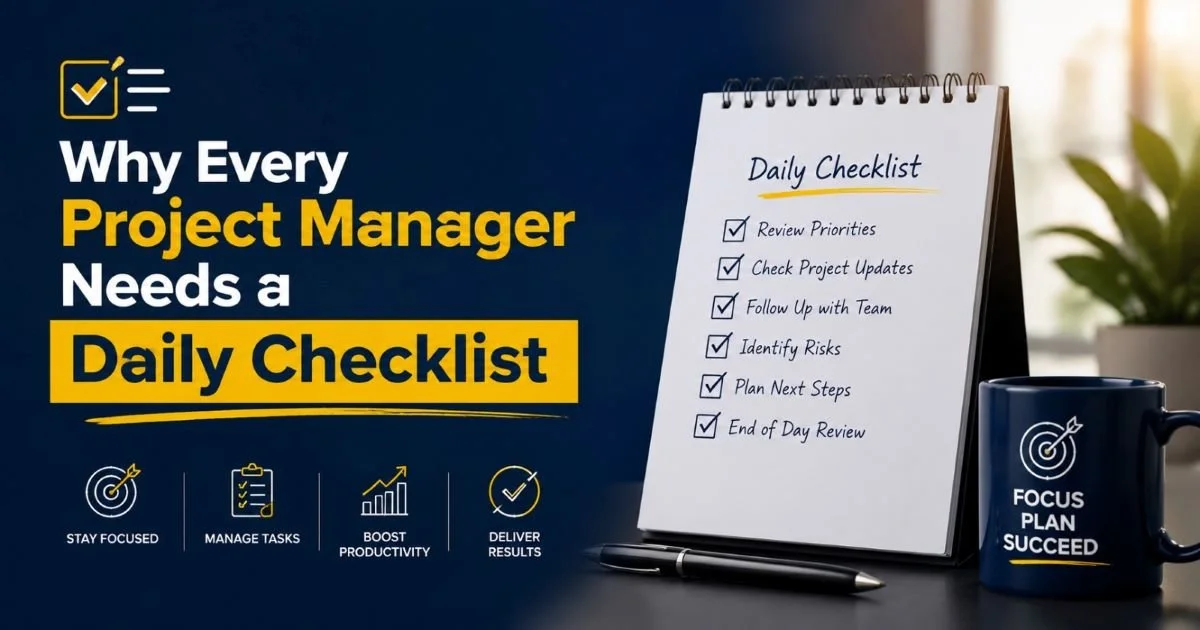
Why every project manager needs a daily checklist is a question that answers itself once you've watched a critical deliverable slip through the cracks at 4:47 PM on a Friday. The reality of modern project management is brutal: competing priorities, shifting stakeholders, and a constant stream of Slack messages that fragment your attention into pieces too small to be useful.
A daily checklist isn't a sign of inexperience or rigidity. It's the single most effective tool for converting chaos into controlled progress. Project managers who adopt this habit report fewer missed deadlines, better team communication, and a surprising reduction in stress.
The difference between a good PM and a great one often comes down to systems, not talent. This guide walks you through exactly how to build and use a daily checklist that actually works.
Key Takeaways
- A daily checklist prevents task slippage and keeps project milestones on track consistently.
- Structured morning reviews reduce reactive firefighting by up to 40% for most teams.
- Combining daily checklists with weekly audits catches scope creep before it spreads.
- Digital checklist templates save 15 to 20 minutes of planning time each day.
- Daily checklists improve accountability across distributed and hybrid project teams significantly.

Step 1: Understand Why Daily Checklists Matter for Project Managers
The Cognitive Load Problem
The average project manager juggles between 12 and 15 active tasks per day across multiple workstreams. Research from the American Psychological Association shows that task switching costs workers up to 40% of their productive time. That's not a minor inefficiency; it's nearly half your day lost to context switching. A daily checklist acts as an external brain, offloading the mental burden of remembering what needs attention and in what order.
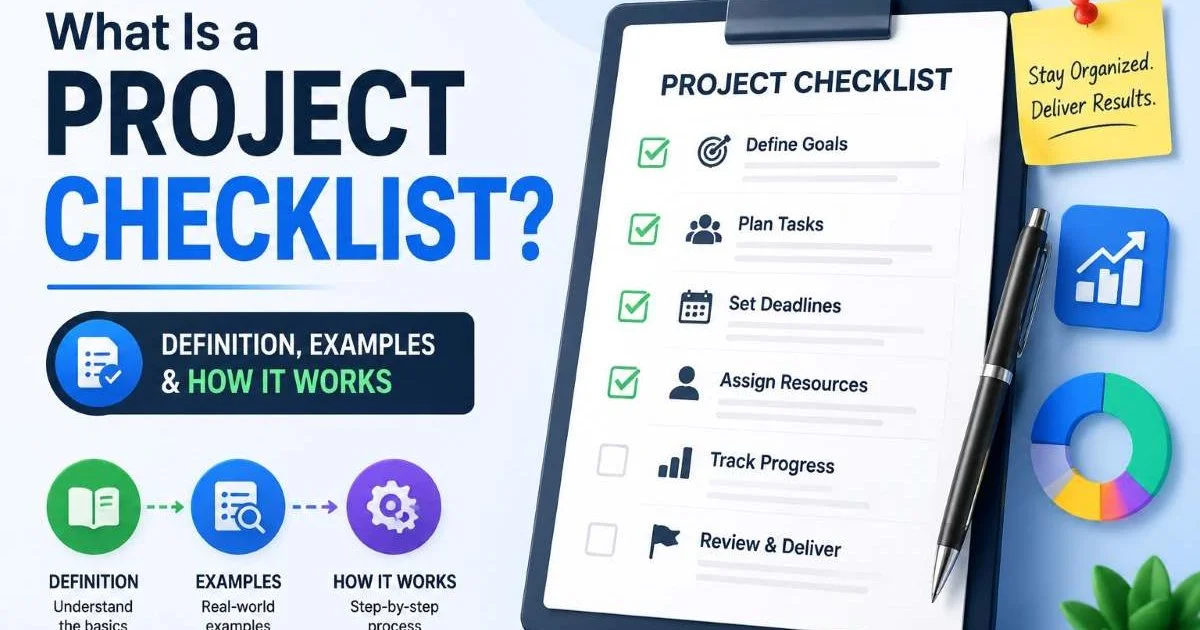
Without a structured system, PMs default to reactive mode. They respond to the loudest email, the most urgent Slack ping, or the stakeholder who happens to walk by their desk. This reactive approach means strategic priorities get buried under operational noise. If you want to understand the broader mechanics of how checklists function in project environments, this guide on project checklist definitions and examples provides a solid foundation.
Accountability and Visibility
A daily checklist creates a written record of intentions and outcomes. When you write down "Review sprint backlog with dev team at 2 PM," you've made a micro-commitment. This small act of documentation transforms vague plans into concrete obligations. It also gives you something to review at week's end when you're trying to figure out where your time actually went.
Visibility matters for your team, too. When team leads share their daily checklists (even informally), it signals transparency and sets expectations. Team members know what's being tracked, what's prioritized, and where their work fits into the bigger picture. This is why every project manager needs a daily checklist: it bridges the gap between intention and execution.
Share your daily checklist with your team in a public Slack channel or shared document to build trust and alignment.
Step 2: Build Your Daily Checklist Framework
Core Sections Every PM Checklist Needs
A useful daily checklist isn't a random list of to-dos. It needs structure that mirrors your actual responsibilities. Start with three fixed categories: communications (emails, standups, stakeholder updates), execution tasks (deliverables, reviews, approvals), and strategic work (planning, risk assessment, resource allocation). Each category should have no more than three to five items. Overloading the list defeats the purpose entirely.
| Checklist Section | Example Items | Time Allocation |
|---|---|---|
| Communications | Standup, stakeholder email, team sync | 60 to 90 minutes |
| Execution | Review deliverables, approve PRs, update tracker | 3 to 4 hours |
| Strategic | Risk log review, resource planning, roadmap check | 60 to 90 minutes |
| Admin/Misc | Timesheet, expense reports, tool updates | 30 minutes |
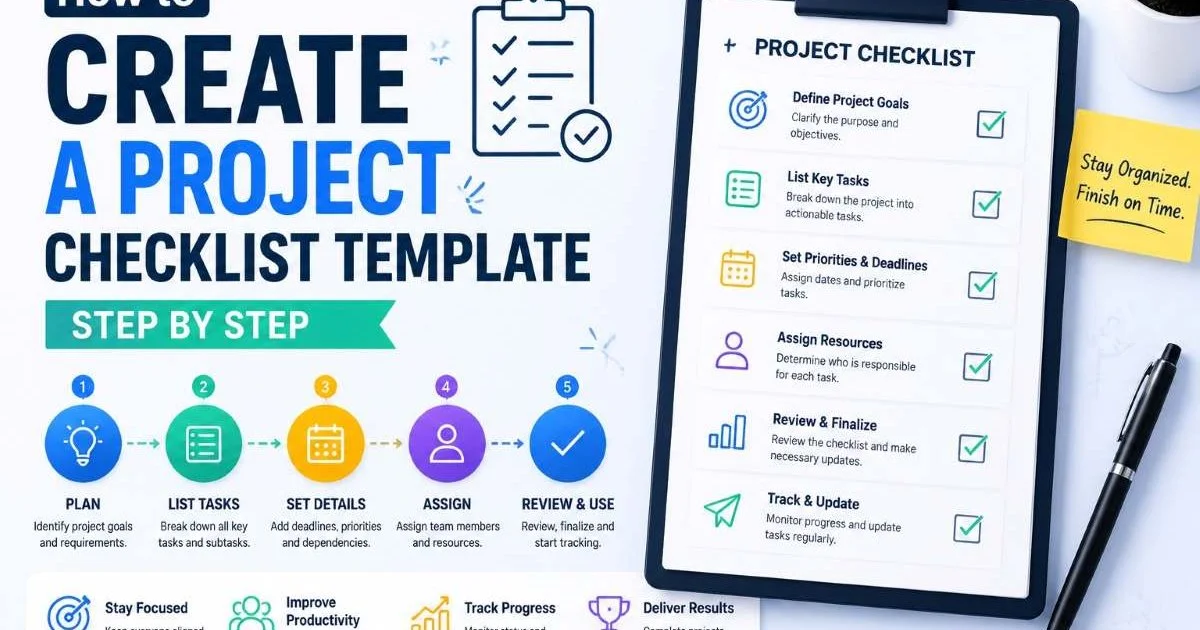
The execution section will vary most from day to day, while communications and strategic work tend to follow predictable patterns. For a detailed walkthrough on structuring reusable formats, check out this resource on how to create a project checklist template step by step. Having a solid template eliminates the daily overhead of deciding what categories to include.
Choosing the Right Format
Some PMs swear by paper notebooks. Others use Notion, Todoist, or dedicated AI-powered task management tools that can auto-generate daily priorities based on project timelines. The format matters less than consistency. Pick one medium and stick with it for at least 30 days before evaluating whether it works for your style.
Avoid using your project management platform (Jira, Asana) as your daily checklist. Those tools track team work; your checklist tracks your personal leadership priorities.
Digital checklist templates offer one major advantage: they're searchable and archivable. Three months from now, when a stakeholder asks why a decision was made on a specific date, you can search your checklist history and find the context. Paper gives you the tactile satisfaction that helps some people focus, but it sacrifices long-term retrievability. Consider a hybrid approach if you're torn: write on paper each morning, then snap a photo and file it digitally.
Step 3: Integrate Your Checklist Into Your Daily Workflow
The Morning Activation Routine
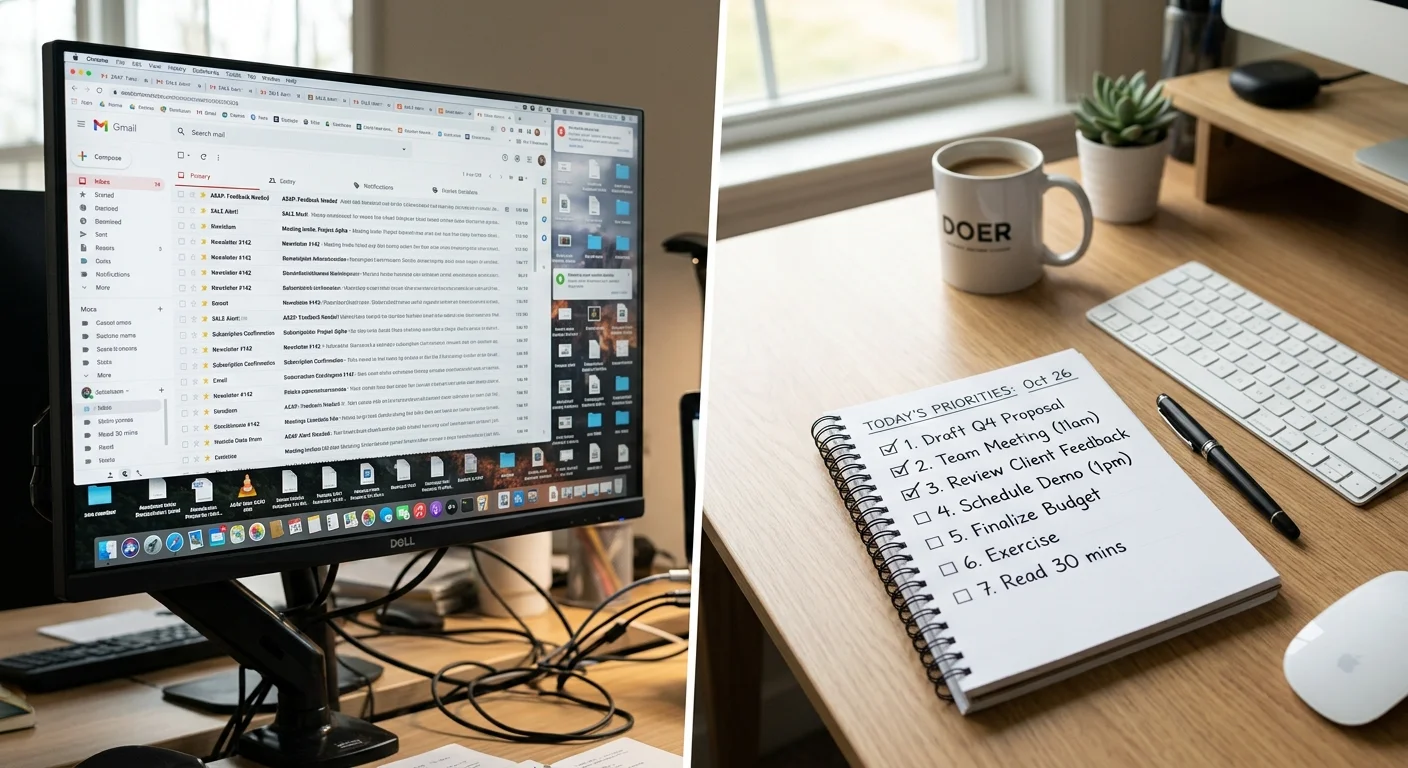
The most effective time to build your daily checklist is during the first 15 minutes of your workday, before you open email. This isn't arbitrary. Neuroscience research confirms that mornings typically offer the highest levels of prefrontal cortex activation, which governs planning and prioritization. By writing your checklist before reacting to incoming demands, you set the agenda rather than inheriting someone else's.
Start by reviewing yesterday's checklist. Anything uncompleted gets either carried forward (if still relevant) or deliberately dropped (if priorities shifted). Then scan your calendar for today's meetings and deadlines. Finally, add two or three proactive items: tasks that move the project forward but nobody is asking you about yet. These proactive items are where the real value of task management lives. They separate reactive managers from strategic leaders.
"The checklist you write before opening email is the checklist that actually controls your day."
End-of-Day Review
Spend five minutes at the end of each day marking items as complete, noting blockers, and jotting down anything that emerged mid-day. This review habit does something powerful: it trains your brain to close open loops. The Zeigarnik effect tells us that unfinished tasks occupy mental bandwidth even after work hours. By deliberately reviewing and closing (or forwarding) each item, you give your brain permission to disengage.
Your end-of-day review also feeds into tomorrow's checklist, creating a chain of continuity that prevents the Monday morning scramble. PMs who practice this consistently report feeling more prepared for standups and status meetings because they've already processed the day's outcomes. Security-conscious PMs might also add periodic items like running a website security scan for SSL issues on their digital properties, especially when managing web-based projects.
Set a recurring 5-minute calendar block at 4:55 PM labeled "Checklist Close" to build the end-of-day review habit.
Step 4: Optimize and Scale Your Checklist Habit
Connecting Daily Checklists to Weekly Audits
A daily checklist becomes exponentially more powerful when you connect it to a weekly review cycle. Every Friday (or whatever day works for your sprint cadence), review the week's checklists as a set. Look for patterns: Are the same tasks carrying over repeatedly? That's a signal of either poor estimation or a systemic blocker. Are strategic items consistently getting pushed? That means operational noise is winning. Understanding the key differences between audit checklists and project checklists helps you structure these weekly reviews more effectively.
This weekly audit checklist review also gives you material for retrospectives and stakeholder reports. Instead of relying on memory to reconstruct what happened this week, you have a day-by-day record. PMs managing multiple projects simultaneously find this especially valuable because it prevents the common problem of one project consuming all attention while others drift quietly off track.
Don't skip the weekly review. A daily checklist without periodic reflection becomes a mindless ritual that loses its strategic value within weeks.
Team-Wide Adoption
Once your personal daily checklist habit is solid (give it at least three weeks), consider rolling it out to your team leads and direct reports. This doesn't mean micromanaging everyone's day. It means giving people a lightweight framework they can customize. Small teams in particular benefit from shared checklist practices, and there are specific task management checklist tips for small teams that make adoption smoother without adding bureaucratic overhead.
You can also explore free project checklist templates across different industries to find starting points that match your team's domain. A construction PM's daily checklist looks very different from a software PM's, and industry-specific templates save you from reinventing structures that already exist. The goal is to make the checklist feel like a natural extension of work, not an additional burden layered on top of it.
Frequently Asked Questions
?How do I structure the morning activation routine in my checklist?
?Is a digital checklist template actually better than a paper one?
?How long does building a daily checklist habit actually take?
?Will a daily checklist alone prevent scope creep from spreading?
Final Thoughts
Why every project manager needs a daily checklist isn't a theoretical argument. It's a practical reality backed by decades of productivity research and the lived experience of PMs who've shipped hundreds of projects.
The habit takes less than 20 minutes per day, costs nothing, and compounds over time into a system that makes you measurably better at your job. Start tomorrow morning with a three-section checklist, review it at day's end, and audit the pattern weekly. That's the whole system, and it works.
Disclaimer: Portions of this content may have been generated using AI tools to enhance clarity and brevity. While reviewed by a human, independent verification is encouraged.