Understanding the audit checklist vs project checklist key differences is one of the most practical things a project manager or team lead can do to sharpen workflow efficiency. Both tools look deceptively similar on the surface: they're lists of items that need completion. But their purposes, structures, and outcomes diverge significantly.
An audit checklist exists to verify compliance and measure existing conditions against a standard. A project checklist, on the other hand, drives forward momentum by sequencing tasks that build toward a deliverable. Confusing the two leads to missed standards, wasted effort, or both.
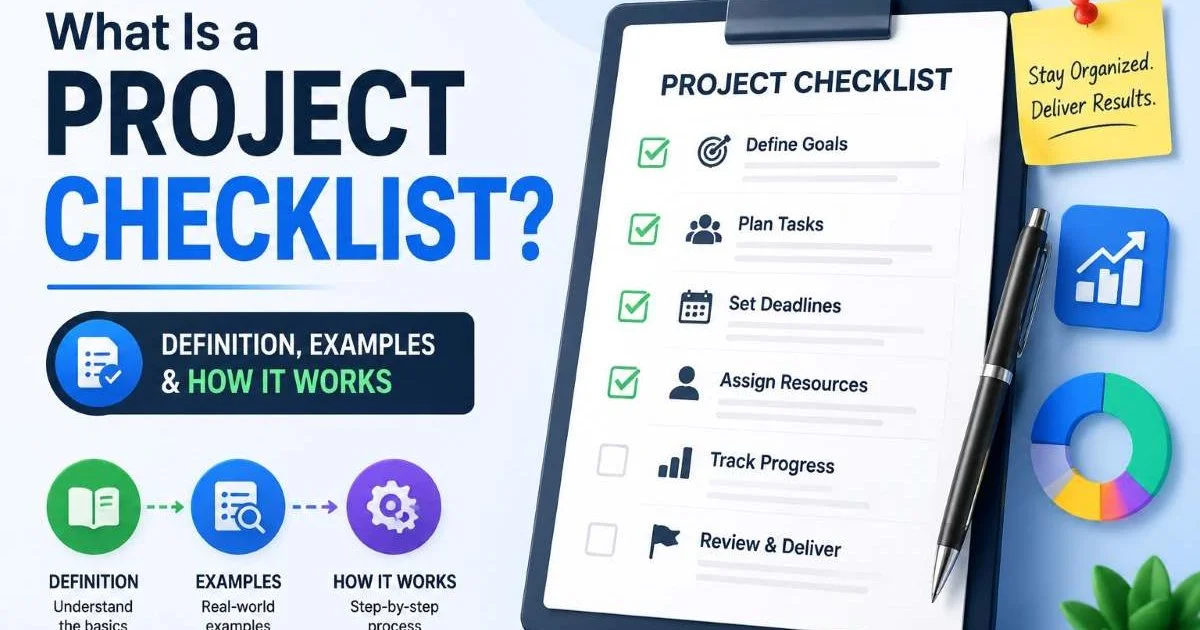
If you want a deeper grounding in how project checklists are defined and how they work in practice, that foundation will make the comparisons ahead even clearer. This article breaks down the core dimensions where these two checklist types differ so you can deploy each one with precision.
Key Takeaways
- Audit checklists evaluate existing conditions; project checklists sequence future tasks toward a deliverable.
- Project checklists are time-bound and progressive; audit checklists are cyclical and repeatable.
- Ownership differs: auditors verify compliance while project managers coordinate execution across teams.
- Templates for each type require different fields, dependencies, and completion criteria.
- Using the wrong checklist type for a task creates blind spots in quality or scheduling.
Purpose and Intent: Why Each Checklist Exists
The Audit Checklist Intent
An audit checklist is fundamentally an assessment instrument. Its job is to compare current reality against a defined benchmark, whether that benchmark is a regulatory standard, an internal policy, or an industry framework. Think of a financial compliance audit: every item on the list checks whether a specific control exists and functions correctly. The checklist doesn't create anything new. It measures what's already in place and identifies gaps that need remediation before the next review cycle.
Audit checklists are not action plans. Remediation steps should live in a separate corrective action document.
The Project Checklist Intent
A project checklist exists to build something. Its purpose is to organize and sequence the tasks required to deliver a specific outcome within a defined timeline. Whether you're launching a product, migrating a database, or planning an event, the checklist moves from start to finish. Each item represents a task that must be completed before the next phase can begin. The orientation is forward-looking and constructive, not evaluative.
This difference in purpose ripples through every other aspect of design and use. When a team lead applies an audit-style checklist to manage project execution, they end up with a snapshot of conditions but no roadmap for progress. When a project checklist template is used for audit purposes, it tracks completion without verifying quality against standards. Recognizing the audit checklist vs project checklist key differences starts right here, with understanding intent.
Structure and Format: How They're Built
Audit Checklist Format
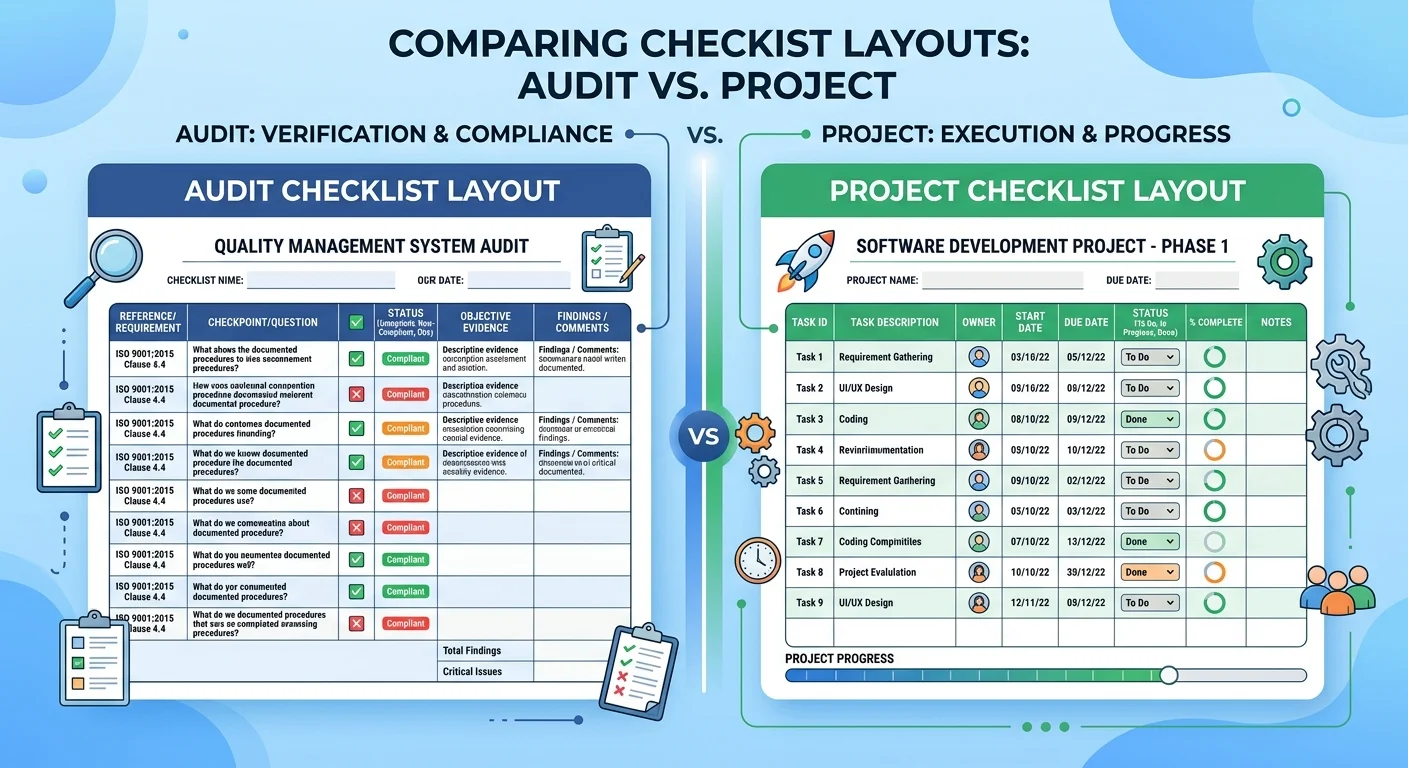
Audit checklists typically use a pass/fail or compliant/non-compliant structure. Each line item references a specific requirement, often tied to a clause number, regulation, or policy section. There's usually a column for evidence or notes so the auditor can document what they observed. The format prioritizes traceability. If someone asks why a particular item was marked non-compliant, the checklist should point to specific documentation or the lack thereof. For a practical example, look at how GDPR compliance audits are structured step by step to see this format in action.
Project Checklist Format
Project checklists are structured around phases, milestones, and task dependencies. A well-built project management checklist includes task descriptions, owners, deadlines, and status indicators like "not started," "in progress," or "complete." The format prioritizes sequence and accountability. You need to know not just what must happen but who handles it and when it's due. Dependencies matter here: task B can't start until task A finishes, which is logic you rarely see in an audit checklist.
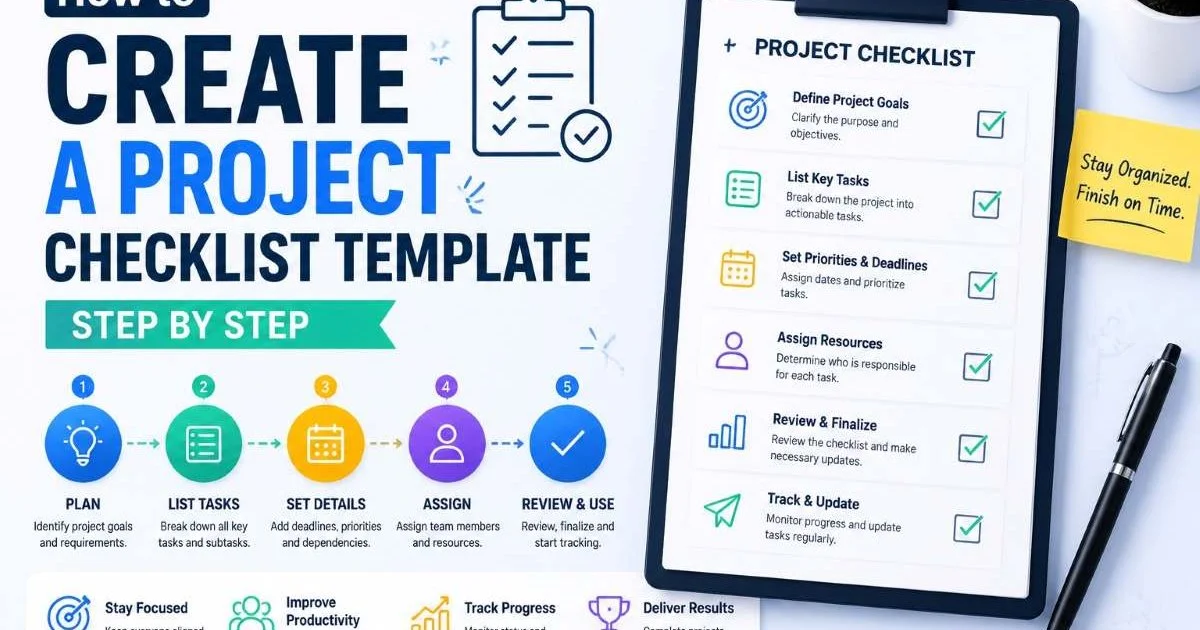
Templates for each type reflect these structural priorities. A checklist template designed for audits will have fields for standard references and evidence notes, while a project checklist template will feature Gantt-compatible fields, assignee dropdowns, and date pickers. Choosing the right template from the start saves significant rework. You can explore various formats at our blog to find templates that fit your specific workflow needs.
Before building a checklist from scratch, identify whether your goal is to verify or to execute. That single question determines the template you need.
Ownership and Accountability: Who Uses Them
The people who own audit checklists and project checklists occupy very different roles. Audit checklists are typically managed by internal auditors, compliance officers, quality assurance teams, or external reviewers. Their authority comes from objectivity. They aren't responsible for building the system they're evaluating; they're responsible for independently assessing it. This separation of duties is a cornerstone of audit integrity across industries from healthcare to finance to software development.
Project checklists belong to project managers, team leads, scrum masters, and sometimes individual contributors. These owners are directly responsible for execution. They assign tasks, unblock dependencies, and track progress against deadlines. Their authority comes from accountability to deliver results. In task management, the checklist is a living document that changes as scope evolves, risks materialize, or priorities shift. It's not a record of what was found but a plan for what must happen next.
"An auditor asks "Does this meet the standard?" while a project manager asks "Is this done on time?""
This distinction matters for team dynamics too. When auditors use project checklists or project managers use audit checklists, role confusion follows. An auditor tracking tasks loses objectivity. A project manager verifying compliance without audit training risks missing regulatory nuances. Organizations that invest in AI agent monitoring tools are increasingly using automated systems to handle compliance checks separately from project workflows, keeping these responsibilities cleanly divided even as automation grows.
The accountability model also affects how checklist results are communicated. Audit findings go into formal reports directed at leadership or regulatory bodies. Project checklist statuses flow into sprint reviews, standup meetings, and dashboards. The audience, the format, and the stakes of reporting differ substantially between the two, and that's another reason the audit checklist vs project checklist key differences demand respect in practice.
Lifecycle and Frequency: When They're Applied
Audit Cycles
Audit checklists operate on recurring cycles. Quarterly financial audits, annual security reviews, monthly quality inspections: these are repeating events where the same checklist (or a slightly updated version) gets used again and again. The value of an audit checklist actually increases with repetition because it enables trend analysis. You can compare this quarter's findings against last quarter's and identify whether remediation efforts are working or whether new risks are emerging.
Each cycle generates a standalone snapshot. The checklist from January's audit doesn't depend on December's; it starts fresh. This independence makes audit checklists modular and reusable. Teams can maintain a master audit checklist template and deploy it with minor adjustments each cycle. The lifecycle is circular, not linear, and the checklist resets with every new engagement.
Project Timelines
Project checklists follow a linear lifecycle with a definitive beginning and end. Once the project launches, the checklist tracks progress through initiation, planning, execution, and closure. When the project wraps up successfully, the checklist is archived. It doesn't reset; it's done. A new project means a new checklist, often with entirely different tasks, owners, and timelines. The lifecycle is finite, and the checklist's relevance expires with the project's completion.
This linear nature creates urgency that audit checklists typically lack. Project deadlines are fixed (or at least aspirational), and every unchecked item represents a potential delay. In project management, a stalled checklist item can cascade into missed milestones. Audit checklists carry consequences too, but the penalty is usually identified in a report and addressed over time rather than causing an immediate schedule failure. Understanding the audit checklist vs project checklist key differences in lifecycle helps teams allocate the right urgency and resources to each tool.
Never repurpose a completed project checklist as an audit instrument. The tasks tracked during execution rarely map to compliance verification criteria.
| Dimension | Audit Checklist | Project Checklist |
|---|---|---|
| Primary Purpose | Verify compliance and assess conditions | Sequence and track task completion |
| Orientation | Backward-looking (evaluates what exists) | Forward-looking (drives what's next) |
| Structure | Pass/fail with evidence fields | Tasks with owners, dates, dependencies |
| Ownership | Auditors, QA, compliance officers | Project managers, team leads |
| Lifecycle | Cyclical and repeatable | Linear with a defined end |
| Frequency | Recurring (monthly, quarterly, annual) | One-time per project |
| Output | Findings report with gap analysis | Completed deliverable or milestone |
| Template Reuse | High (same template each cycle) | Low (new template per project scope) |
Frequently Asked Questions
?How do I convert an audit checklist into a project checklist?
?Can one checklist tool handle both audit and project workflows?
?How often should audit checklists be run versus project checklists?
?Is it really a problem to use a project checklist for an audit?
Final Thoughts
The audit checklist vs project checklist key differences come down to intent, structure, ownership, and lifecycle. One verifies; the other builds. One recurs; the other concludes. As a project manager or team lead, your effectiveness improves when you select the right tool for the right purpose rather than forcing one format to do double duty.
Keep audit checklists in the hands of evaluators and project checklists in the hands of executors, and both your compliance posture and your delivery speed will benefit.
Disclaimer: Portions of this content may have been generated using AI tools to enhance clarity and brevity. While reviewed by a human, independent verification is encouraged.